
Sara Omi Casamá is a Panamanian indigenous leader, lawyer, and human rights advocate, recognized for her work promoting the leadership, autonomy, and dignity of indigenous peoples, especially women.
She was born on August 30, 1986, in the community of Ipetí Emberá, in Alto Bayano, a territory deeply connected to nature, tradition, and ancestral wisdom. From a very young age, her life was marked by a dual awareness: pride in her cultural identity and clear evidence of the structural inequalities facing indigenous communities.
Trained in Law and Political Science, Sara complemented her education with studies in human rights, indigenous leadership, and international cooperation, both in Panama and abroad. This academic foundation allowed her to move comfortably between two worlds: that of modern institutional structures and that of her people's traditional forms of organization. She didn't choose one over the other; she decided to build bridges.
“Sara Omi is a force of nature. Her leadership doesn't just inspire, it transforms. She has been recognized as Outstanding Woman of the Year by the Panamanian Association of Business Executives, and yet the most impressive thing isn't the awards, it's her ability to open the way for others. Sara isn't the exception — she represents what's possible.”
– Eric Humbert, Co-founder, Sara Omi Foundation
Throughout her career, she has held key roles in national and international organizations.
She served as President of the General Emberá Congress of Alto Bayano, becoming one of the first young women to lead this traditional structure. She has also worked with entities such as UN Women, the United Nations Development Programme (UNDP), and UNICEF, focusing on indigenous rights, gender equity, and sustainable development. Her voice has been present in global forums, including conferences on climate change and human rights, where she has represented the perspective of indigenous peoples with clarity and strength.
However, beyond the positions she has held, what defines Sara Omi is her vision. She understands that the problem is not a lack of talent or cultural wealth in indigenous communities, but the absence of systems that turn that value into real opportunities. That's why she has dedicated much of her work to driving models that integrate cultural identity with economic development, always from a non-extractive and deeply respectful standpoint.
In 2017 she founded the venture Jumara Juwa, which means “everyone's hands,” an initiative that combines cultural tourism and the commercialization of crafts, generating income while strengthening cultural pride. This project reflects her approach: generating economic wellbeing without sacrificing identity.
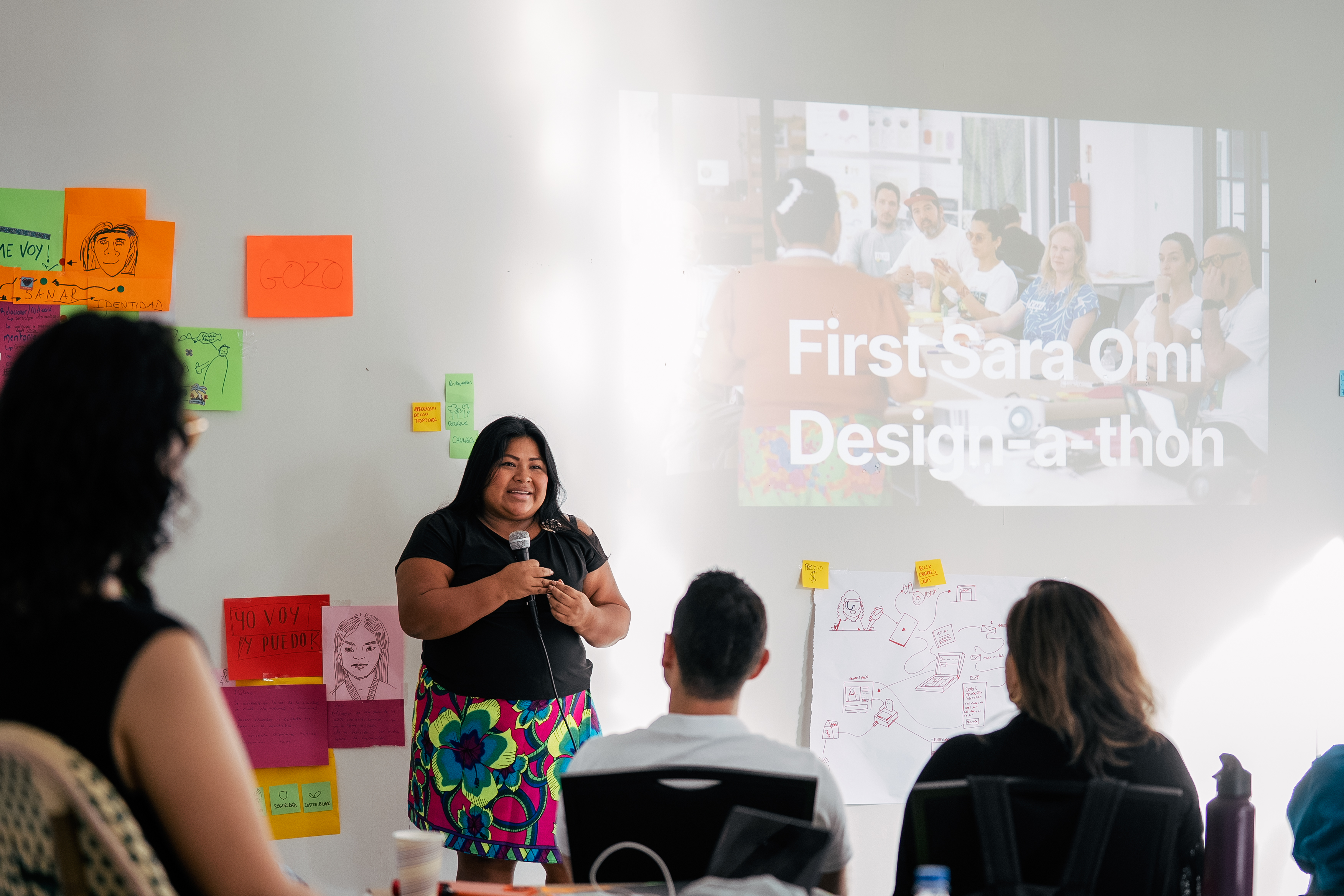
Today, that thinking has evolved into the Sara Omi Foundation, a platform that seeks to build the infrastructure for indigenous women's sovereign participation in the economy and in spaces of decision-making.
This is not about assistance, but agency. Not forced integration, but co-creation.
Sara has been recognized for her regional impact, including her inclusion on Forbes' list of the 100 most powerful women in Central America, and multiple honors for her leadership and defense of indigenous rights.
But perhaps her most important achievement is not found in the awards, but in what she represents: a new generation of indigenous leadership. A generation that doesn't ask for permission, that doesn't negotiate its identity, and that understands the future is not about choosing between tradition and progress, but about designing a path where both coexist with dignity.
Get news, updates on our programs, and real ways to support indigenous women's leadership. Leave us your email and become part of this growing community.
%20(1).jpg)
