The question guiding the foundation's documentary — “Las Manos de Todos”
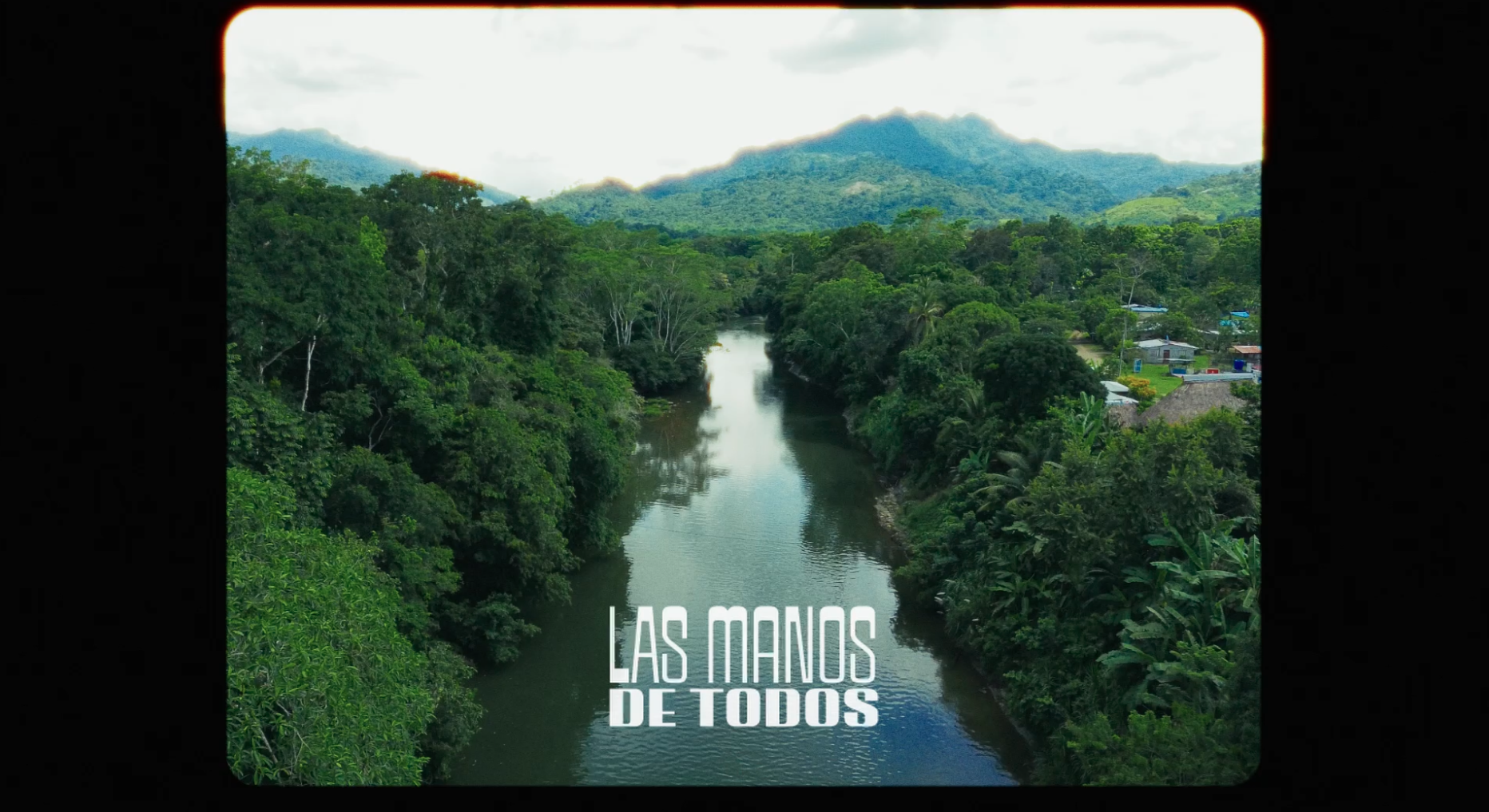
At the Sara Omi Foundation, we start with a question. Not with an answer, not with a program, not with a budget. With a question.
The question guiding the foundation's documentary — “Las Manos de Todos” (Everyone's Hands) — is this:
Does film have the power to change the reality of an indigenous community?
We're putting it to the test. Not as a metaphor. As a working hypothesis.
The documentary's director, María Isabel Martínez, came to this project as a channel.
“My purpose is to be a means of amplifying the voice of the women of Ipetí. And at the same time, amplifying the voice of everyone supporting and building the Sara Omi Foundation.”
That distinction matters. It isn't a film about the community. It's a film made with the community, from the community, to change what the community can become.
Executive producer Eric Humbert defines the foundation's goal: document the process, listen to the needs, leave evidence of what's happening in Ipetí.
Two roles. One shared purpose.
In startup language, we'd say: we have a hypothesis that needs validation.
In María Isabel's words, it's framed like this:
“Creativity, craftsmanship, art, film, design — they have the power to create powerful stories. They have the power to change the narrative. They have the power to create realities.”
The independent variable: collective creativity among emerging filmmakers from Panama and Latin America, co-creating with the Emberá community of Ipetí, with the Amaríe Artisans' Association, and with the Jumara Juwa brand.
The dependent variable: a new narrative. A new reality.
The success indicator: that people who watch the film say — not just “wow, Sara” — but “wow, everything that's happening.
And everything we want to happen.”
Indigenous communities in Latin America have spent decades being narrated by others. Crafts. Tourism. Humanitarian aid cases. Images that position them as objects of compassion, not as subjects of power.
The Sara Omi Foundation's documentary proposes the opposite: that the camera be an instrument of narrative sovereignty. That the women of Ipetí not be the subject matter — but the protagonists who define it.
This has a cultural precedent. When Black Panther hit theaters, something shifted in the global Black audience. It wasn't just entertainment. It was recognition. It was seeing themselves in the hero, not in the problem.
What happens when Emberá women see themselves on screen — not as artisans in need of help, but as architects of their own future?
At one point, a word comes up that stops the conversation: dharmic.
Not karmic — dharmic. The difference is precise. It's not debt. It's purpose. It's doing what needs to be done because it's right, because the moment demands it, because history calls for it.
“Working together, co-creating as a collective, we're doing dharmic work — to prove that creativity, that art, that film, that design has the power to create powerful realities.” José Caballer, Foundation Launch Director.
This isn't NGO language. It isn't pitch language. It's the language of deep conviction — the kind of conviction that holds projects together when the budget falls short, when allies hesitate, when the process gets complicated.
In Emberá tradition — as in many Indigenous traditions — the word, the stories, have creative power.
They don't describe reality. They summon it.
The documentary “Las Manos de Todos” is built on that same premise: that naming what the women of Ipetí are — leaders, creators, economists of their own territory — is the first act of transformation.
First comes the word. Then comes the world the word builds.
That's the hypothesis. And we're just starting to test it.
—
The Documentary:
Las Manos De Todos:
Building the Sara Omi Foundation
Premiere: October 16, 2026
Directed by:
María Isabel Martínez
Editor:
Fernando Broce
Executive Producers:
Kike Brito - Llega
José Abraham Caballer
Eric Humbert
Featuring:
Sara Omi
Amaríe
Jumara Juwa
Kari Huske - KH Strategies
PAPE Ink
Cintli Chacón
Felice De La Gatta
Carlos Blandón, FSC Indigenous Foundation
The Sara Omi Foundation is building a replicable model of community development led by indigenous women in Panama.
If you want to be part of this and help bring this documentary to life, write to us at info@saraomi.org
How this article was created with AI
We're sharing how we created this article for the benefit of our whole community of allies.
This article was written using Claude, Cockatoo, the iPhone voice recorder, and published through Webflow.
From the initial idea to publication, the process took about two hours.
Get news, updates on our programs, and real ways to support indigenous women's leadership. Leave us your email and become part of this growing community.
%20(1).jpg)
