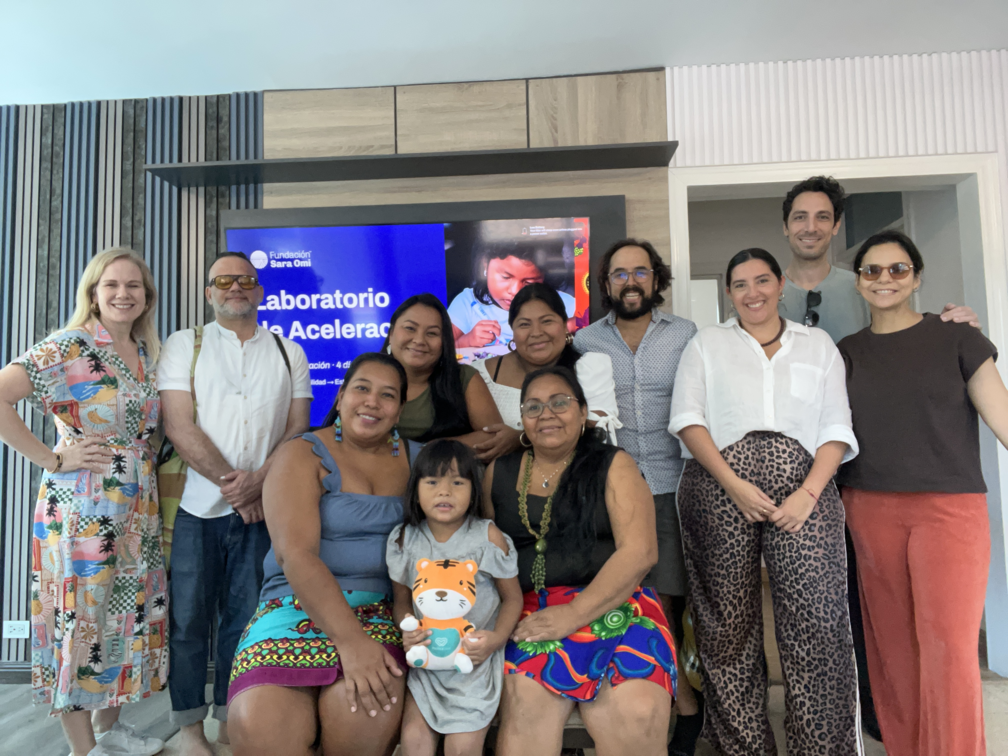
We brought Sara Omi's voice to the OAS and the beauty and history of Jumara Juwá to Washington D.C. The message was clear: Indigenous development is born in community.
In short
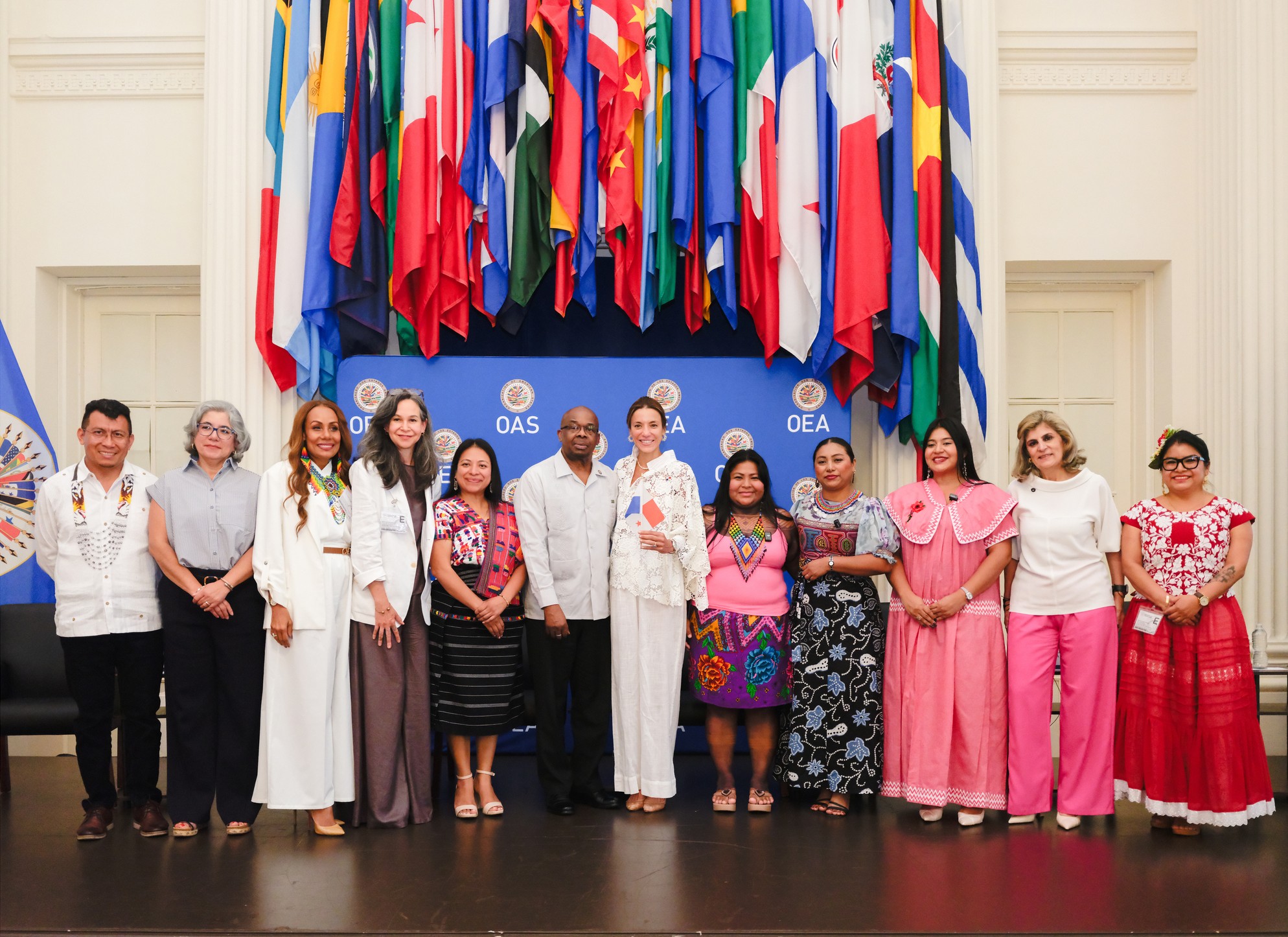
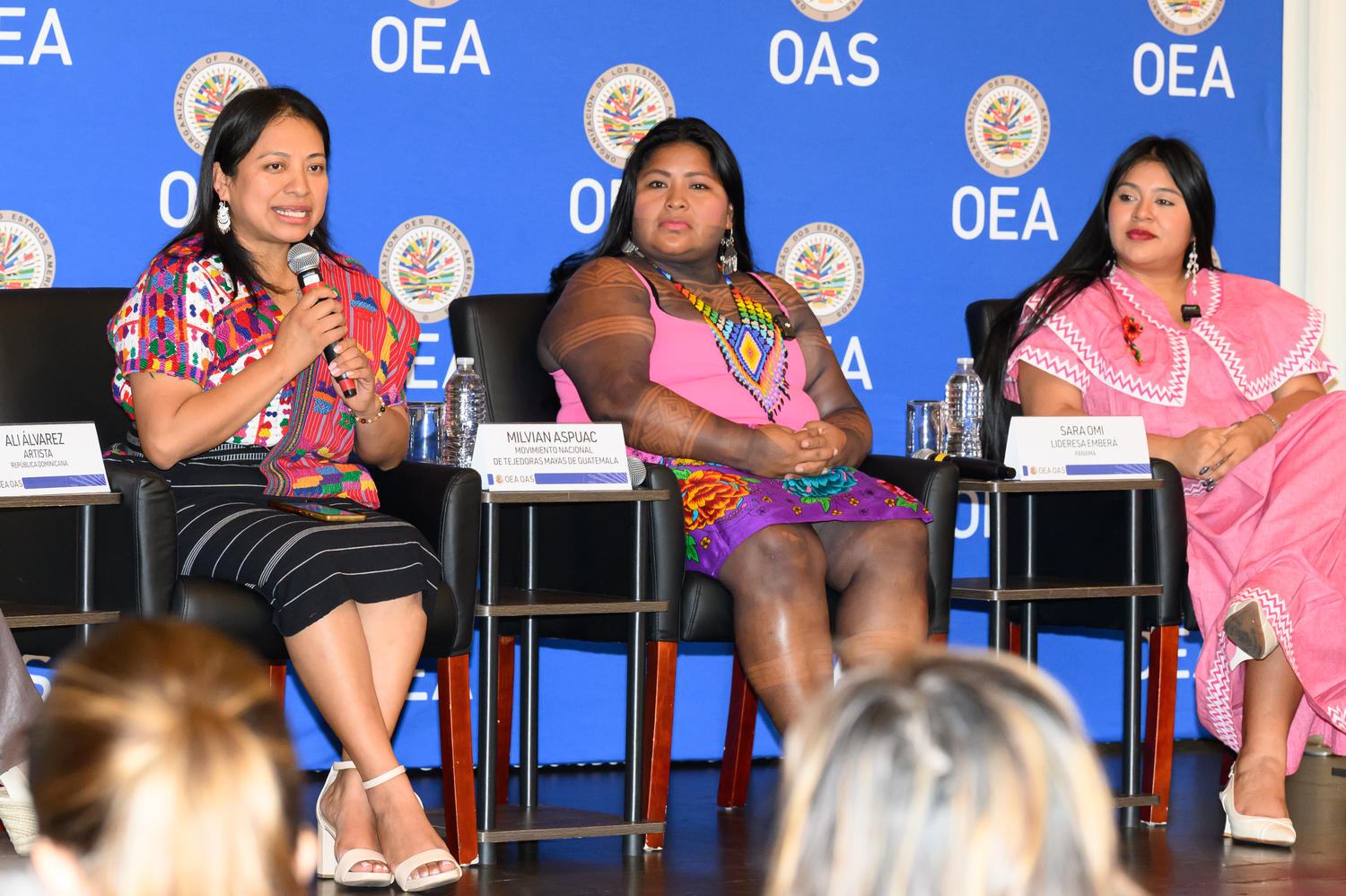
→ Sara Omi brought the voice of Emberá women to the Special Session of the OAS Permanent Council, as part of the 9th Inter-American Week of Indigenous Peoples.
→ We were the only sponsoring foundation of El Origen Panamá, alongside the Permanent Mission of Panama to the OAS and VYA Productions.
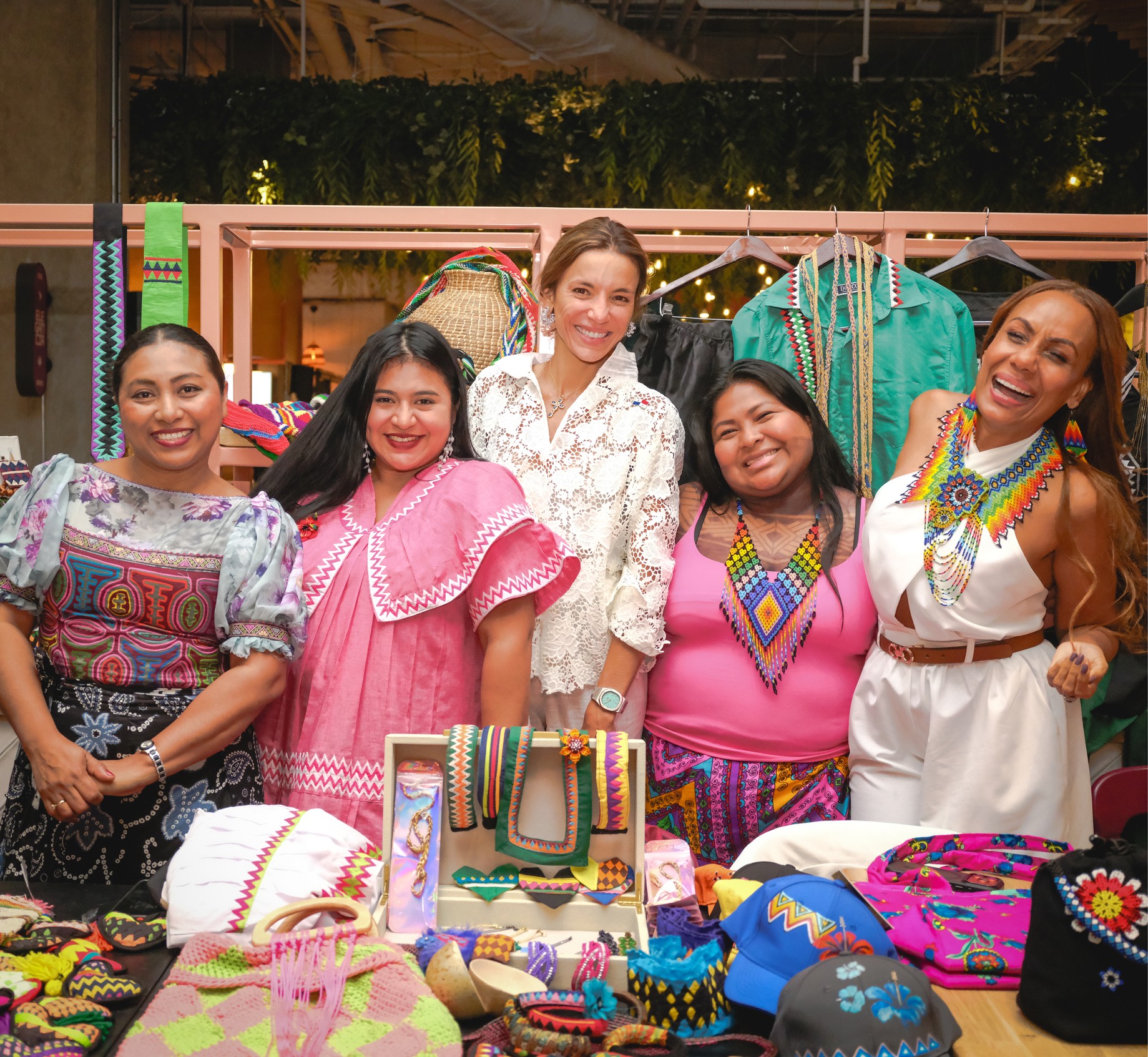
→ Our cooperative Jumara Juwá exhibited and sold its crafts at a pop-up market at Café Unido, a Panamanian brand, in Washington D.C.
→ A direct message to governments: Indigenous development is built from the community, not from offices.
From August 10 to 14, 2026, Washington D.C. hosted the 9th Inter-American Week of Indigenous Peoples, under the theme "Roots that sustain, knowledge that transforms". For a week, the headquarters of the Organization of American States (OAS) became a meeting point for women leaders, artists and delegations from across the hemisphere.
Panama was there with El Origen Panamá, a cultural program led by the Permanent Mission of Panama to the OAS and produced by VYA Productions. The Sara Omi Foundation (FSO) was there as its only sponsoring foundation: not as a spectator, but as a Panamanian strategic ally, bringing the voice and work of Indigenous women to one of the main diplomatic stages in the Americas.
Sara's Voice at the Permanent Council
On the morning of Wednesday, August 12, Sara Omi spoke at the Special Session of the Permanent Council, in the Simón Bolívar Hall of the Liberator. She spoke, in her words, not only with her own voice, "but with the voice of many women who walk" with her.
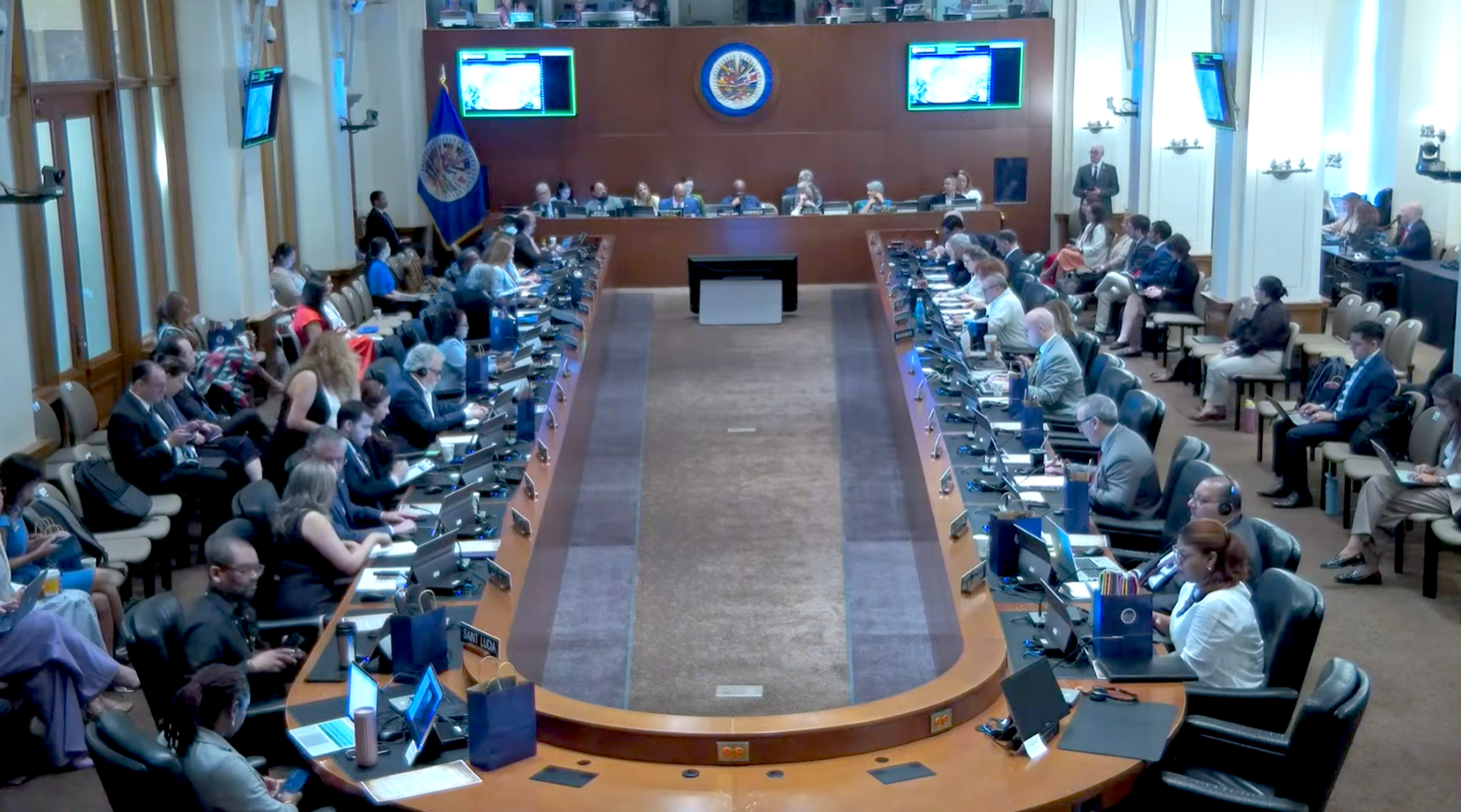
She told the origin story of Jumara Juwá ("the hands of all women"), the cooperative born from a simple yet enormous question: now that everything has changed, "who will keep weaving, and how do we create an economy for our families?" She found a collective answer: "Wisdom doesn't belong to one woman, it belongs to all of us. It passes from mother to daughter, and that's how it stays alive".
Without hesitation, Sara also spoke about the gaps that still hurt: an aqueduct left unrepaired for more than forty years and communities where access to healthcare is still an unpaid debt.
“Behind every figure on access to healthcare there is a life and there is a family”,
Sara reminded the room. In the face of that reality, she showed what they are already building: for three years, through Amarie, her association of Emberá women artisans, they have been running a women-led solar energy program. For many, turning on a light at home for the first time is, quite literally, dignity.
From there she explained the FSO's three pillars: women's economic sovereignty, a cultural narrative told by the women themselves, and the basic infrastructure (water, energy, connectivity) that is still missing. And she was clear about our role: the FSO
"does not come to replace the responsibility of our governments, but to open doors".
Her message to the hemisphere was both an invitation and a call:
"If the world wants to save the planet, that has to do with our rights, our territories and our knowledge", setting the condition that "initiatives must be built from the communities, and not from offices".
Textile Art as Living Memory
Panama's presence was also felt at the panel “Indigenous textile art as a system of memory and cultural teaching”, proposed by the Permanent Mission of Panama and open to all delegations.
Alongside Sara Omi (Emberá), two extraordinary fellow Panamanian weavers took part: Yhanisell Chávez (Ngäbe-Buglé) and Yalivet Roldán (Guna Yala). Among molas, beadwork and natural fibers, it became clear that every piece holds a narrative: nature, spirituality, memory and oral history.
Jumara Juwá at the Pop-Up Market
Beyond the OAS building, we took the art into the city. Our cooperative Jumara Juwá set up a pop-up market at Café Unido, in Washington D.C., to exhibit and sell its crafts. We are especially moved that the space belongs to a Panamanian brand that has taken our country's coffee to the world: two stories from the isthmus meeting far from home.
For us, that market is not a logistical detail. It is economic sovereignty in action. It is women's work going from invisible to a livelihood. Now in front of an international audience.
An event like this is worth what it opens up. In Washington we positioned Sara Omi and our cohorts before missions, ministries and allies across the hemisphere, and planted relationships that are already shaping the Foundation's next steps. We also learned something we will do more and more: turn every conference into an impact narrative, capture these stories and keep telling them.
Thank You for Walking With Us
Part of the success of this experience we owe to those who follow us through our newsletter and believe in the leadership of Indigenous women. If you're not part of it yet, join us: that's where we share updates, stories and real ways to support.
Thanks to the Permanent Mission of Panama to the OAS, to VYA Productions and to Café Unido for making this presence possible. And above all, to the hands of all women.
Get news, updates on our programs, and real ways to support indigenous women's leadership. Leave us your email and become part of this growing community.