Talent has never been the problem. What is usually missing is the brand, the business model, and the legal structure to turn it into real income. This is how we solve it.
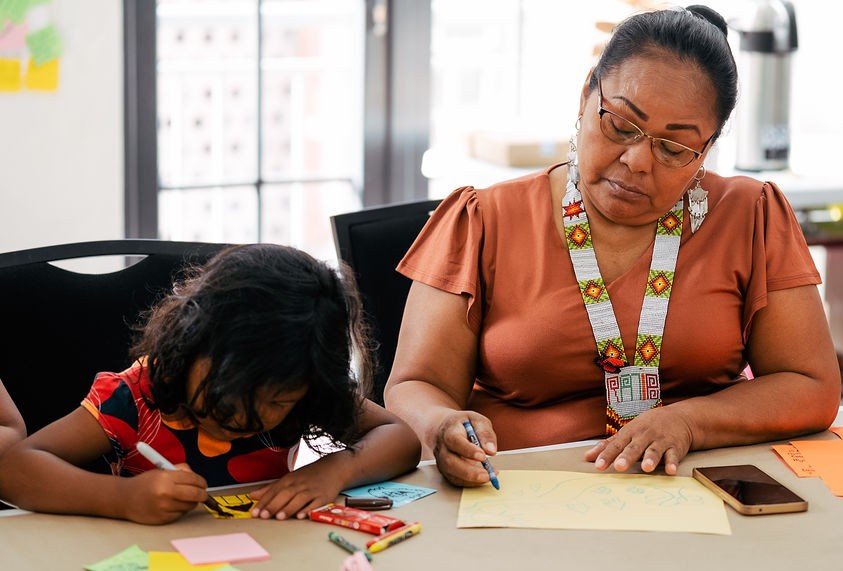
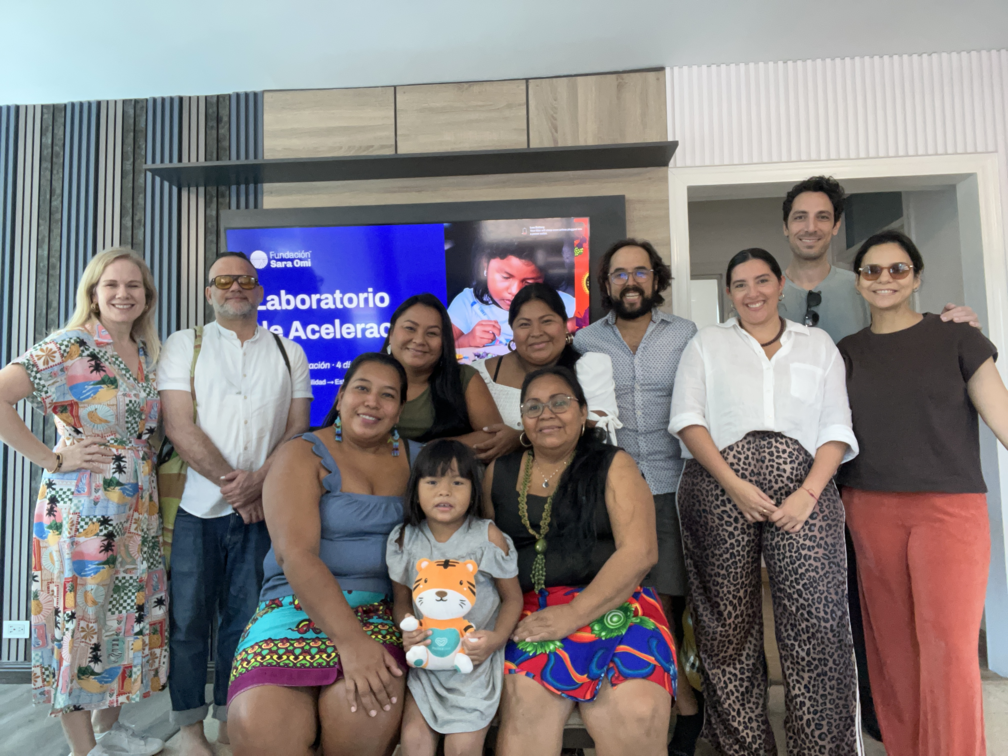
Accelerator Lab is the program through which the Sara Omi Foundation turns the talent of women entrepreneurs into income that is their own, stable and controlled by them. The goal of the first cycle is concrete: 25 women reaching $350 a month sustained over 12 months, each one with a brand, a business model, and a legal and financial structure in her own name. We are not starting from a theory but from a leader. Before opening the program to a full cohort, we test it end to end with one real entrepreneur, and we only scale what has already been proven to work.
To get there we follow a three-phase structure —Identity, Possibility and Structure— that moves in that order and does not skip ahead, because each phase resolves something the next one needs in order not to fail.
1. Identity
Every business that lasts begins with a question that is almost never asked out loud: who are you, beyond your product? This first phase uses a methodology already tested in very different contexts —young people living on the street, creative professionals, Burning Man communities— and here we apply it to Indigenous women entrepreneurs. The core work of this phase is to name and let go of “victim mode”: the narrative of scarcity and reparative justice that, without meaning to, ends up defining how a woman presents herself to the world and limits what she allows herself to build. We do not avoid it or dress it up; we confront it head-on, by name, in order to leave it behind.
We have a precedent that taught us why this is not optional: at a textile panel with the OAS, the story slipped into the language of victimhood and justice instead of one of capability and craft. This phase exists precisely so that does not happen again. Out of it come the personal brand essence, the map of key stakeholders, and the core messages that will hold up everything built afterwards.
2. Possibility
With a clear identity, the question changes: what business, exactly? Here we do not arrive with a prescribed model. We use Socratic questions —not recipes— so that each woman discovers her own path, even though we keep close to twenty already-validated options in reserve to guide the conversation when needed.
We sort the opportunities into three categories: Core (what already works and takes the least effort to scale), Growth (new segments or short-term platforms), and Exploratory (5–10 year bets, with no commitment yet). In this first cycle we are testing two business models: e-commerce of physical goods, and digital products or courses. Experiences and tourism are deliberately left for a second phase of the program, not because they do not work, but because now is not the time. And here we make an honest distinction: a physical product is a long road —it requires manufacturing and distribution— while a digital product is a real shortcut to income. That difference changes each woman’s strategy depending on her starting point.
3. Structure (“Business in a Box”)
Identity and a business idea do not generate a single dollar unless they exist in the real world: with their own domain, a website, a professional email under the foundation’s or Amarie’s domain, business cards, a style guide, a bank account, and everything in order legally and fiscally. We call that “Business in a Box”: the full checklist that turns an idea into an entity that can invoice, get paid, and grow.
Here we make a deliberate decision: we do not do it for them, we build it with them. It is slower than simply handing over a ready-made business, but it is the only way for the capability to stay in their hands and not depend on us. So that the workshop does not stall at the first bit of friction, we come in with the bank and the law firm already aligned on the cohort in advance, so that paperwork that normally takes weeks does not interrupt the process.
Talent has never been the problem. What is usually missing is everything else: women with craft and vision who never manage to translate it into stable income, because they have no clear brand to sell themselves with, no validated business model, and no legal and financial structure to operate as a real company. Without that, talent stays trapped in informality: sporadic sales, dependence on middlemen, and an income ceiling that never lifts.
There is a second problem, quieter but just as decisive: the narrative many women have learned to tell about themselves, one of scarcity and the need for outside help, which without meaning to becomes the ceiling on what they dare to build. A program that delivers structure without first resolving that narrative is building on a foundation that will not hold.
And there is a third problem that goes straight to the root of economic sovereignty: even when money starts to flow, it often does not reach the hands of the person who generated it, but passes through middlemen who administer, decide, and withhold. That is why our revenue architecture —even though today the foundation temporarily operates the e-commerce and the payments while the structure is being finished— has an explicit goal: that Jumara Juwa —not the foundation— receives the funds directly, with income split automatically between the foundation, Amarie, and Jumara Juwa once the structure is ready. Economic sovereignty means, in very concrete terms, controlling your own money.
Because we respect the order. You cannot build a solid business structure on an unresolved identity, and you cannot explore real possibility while the victim narrative is still in charge. Each phase exists because the previous one made it possible, and that is what separates this program from a generic entrepreneurship training.
Because we test before we scale. The program is validated first with a single entrepreneur, in an intensive and documented format, before opening to a full cohort. We prioritize the right sequence over speed or reach: we would rather do it well with one person than halfway with twenty-five.
And because we build capability, not dependence. We choose the slower path —the workshop instead of the ready-made handover— because the goal is not for the business to work while we are around, but for it to keep working when we are gone. That, in the end, is the real measure of success: that the income, the structure, and the control of the money stay where they always should have been —in the hands of the women who built them.
If your organization wants to partner with this program, if you are a woman entrepreneur who wants to be part of an upcoming cohort, or if you simply want to know more about the Sara Omi Foundation’s Economic Sovereignty Pillar, write to us. We are building this with full transparency about what already works and what we are still figuring out, and we would love to tell you where we are.
Get news, updates on our programs, and real ways to support indigenous women's leadership. Leave us your email and become part of this growing community.
%20(1).jpg)
