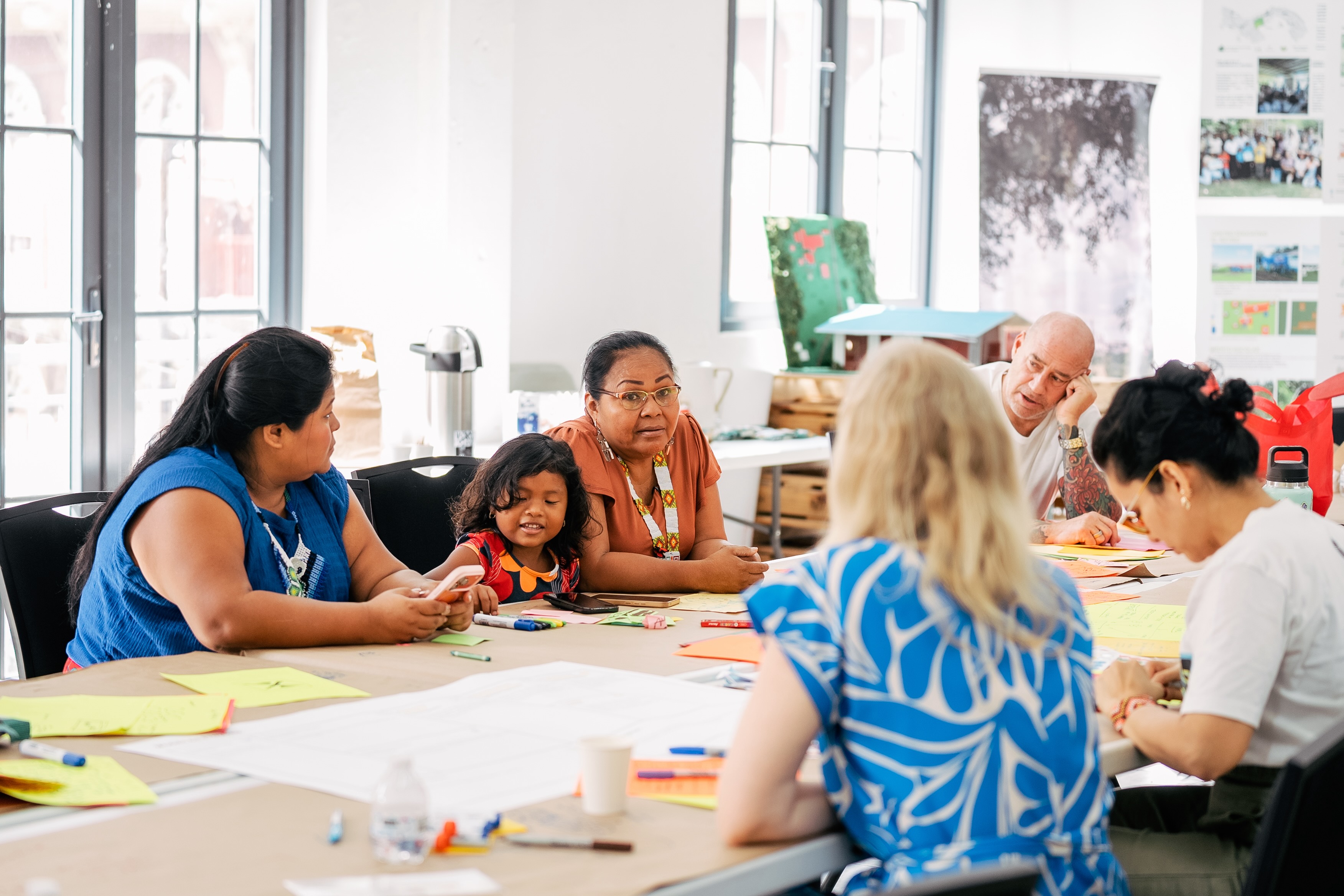
Sarai was about 7 years old when she showed up at the design-a-thon. She didn't arrive as an observer. She sat at the table alongside designers and strategists twice her age, and took part with a seriousness that unsettled the adults in the room. No one had asked her to stay quiet. No one had asked her to speak, either. But she was there, taking up space, as if she knew — in a way she didn't yet have words for — that this place was hers.
Her aunt, Sara Omi, founded the organization that bears her name with a similar conviction: that Panama's indigenous women don't need anyone to rescue them. They need systems that rise to meet what they already are. The question that guides the foundation's work is deceptively simple: if Sara could do it, why aren't there more Saras?
“Our struggle isn't easy, but it's necessary. Not so they believe in another woman, but so they believe in themselves.” – Sara Omi
There's a comfortable way of talking about indigenous communities in Latin America: talking about what is lost. The traditions that fade. The crafts that end up in a souvenir market, stripped of their history. That story is true, but incomplete. When the only available frame is loss, the work done in response tends to be archaeological — preserving what remains, documenting what's disappearing, building a display case. And the actual woman, with a name and an idea that hasn't yet had room to grow, gets reduced to a carrier of culture. A vessel, not an agent.
The Sara Omi Foundation starts from a different diagnosis. It identifies three problems: erosion of identity — not just of traditions, but of the intimate confidence in one's own worth; gender discrimination that silences a voice before it finds words; and an economic infrastructure that, at best, ignores these women. The talent exists. The culture exists. The knowledge exists. What's missing is the system that turns that value into real opportunity.
The throughline of the work — identity, voice, value — might sound like a corporate slogan. But the bet is that these three concepts form a causal sequence: identity strengthens confidence; confidence activates voice; voice creates value; and sustained value produces what the foundation calls economic sovereignty. That phrase is worth pausing on. Sovereignty is not a synonym for income. A woman can have an income and still lack sovereignty, if that income depends on decisions others make for her. Economic sovereignty implies decision-making power, sustainability, and — a word that rarely shows up in impact reports — dignity.
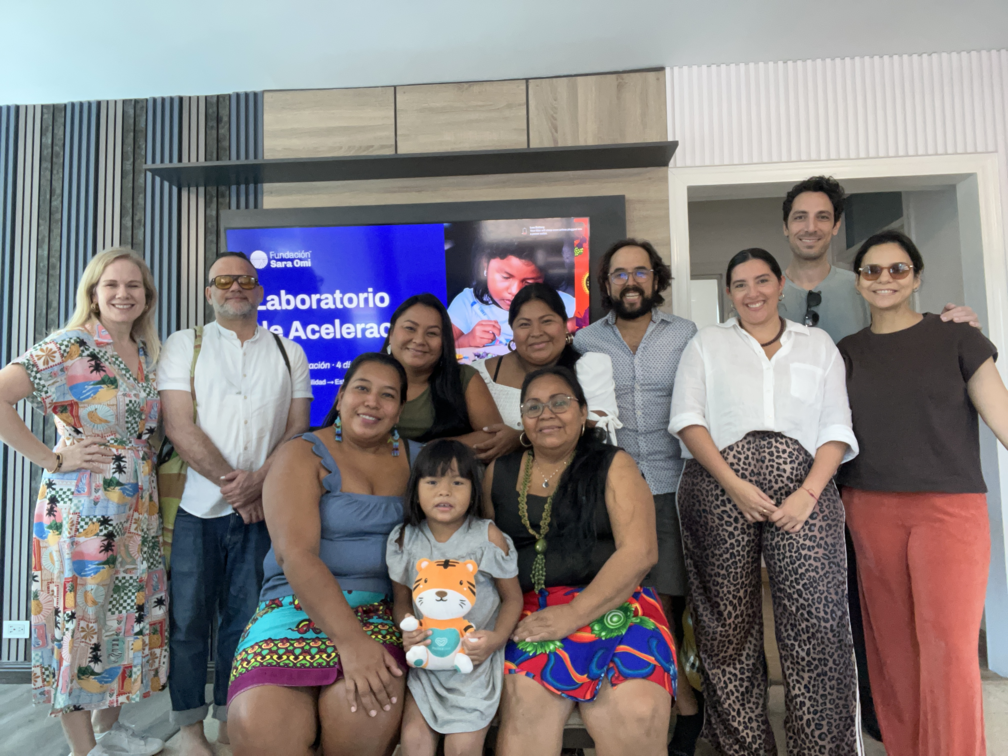
That translates into e-commerce, into products reaching markets that were previously closed, into spaces of co-creation where communities are not the object of design but its authors. Genuine co-creation isn't just inviting someone to the table. It's sitting down willing to be changed by what happens there — something that also demands work from the investor, the designer, the institutional partner who arrives with resources and good intentions but needs to ask what assumptions they're bringing with them.
No one can know what Sarai will remember about that design-a-thon when she's thirty. Maybe it won't be any specific idea, but the feeling of having been in a room where her presence was expected and her opinion mattered. That, at bottom, is what the foundation is trying to build: not a model to be replicated identically everywhere, but the conditions for more people to ask themselves that question without the answer arriving from outside. Culture isn't preserved by locking it in a display case. It's elevated when those who carry it have the power to decide what to do with it.
Get news, updates on our programs, and real ways to support indigenous women's leadership. Leave us your email and become part of this growing community.
%20(1).jpg)
